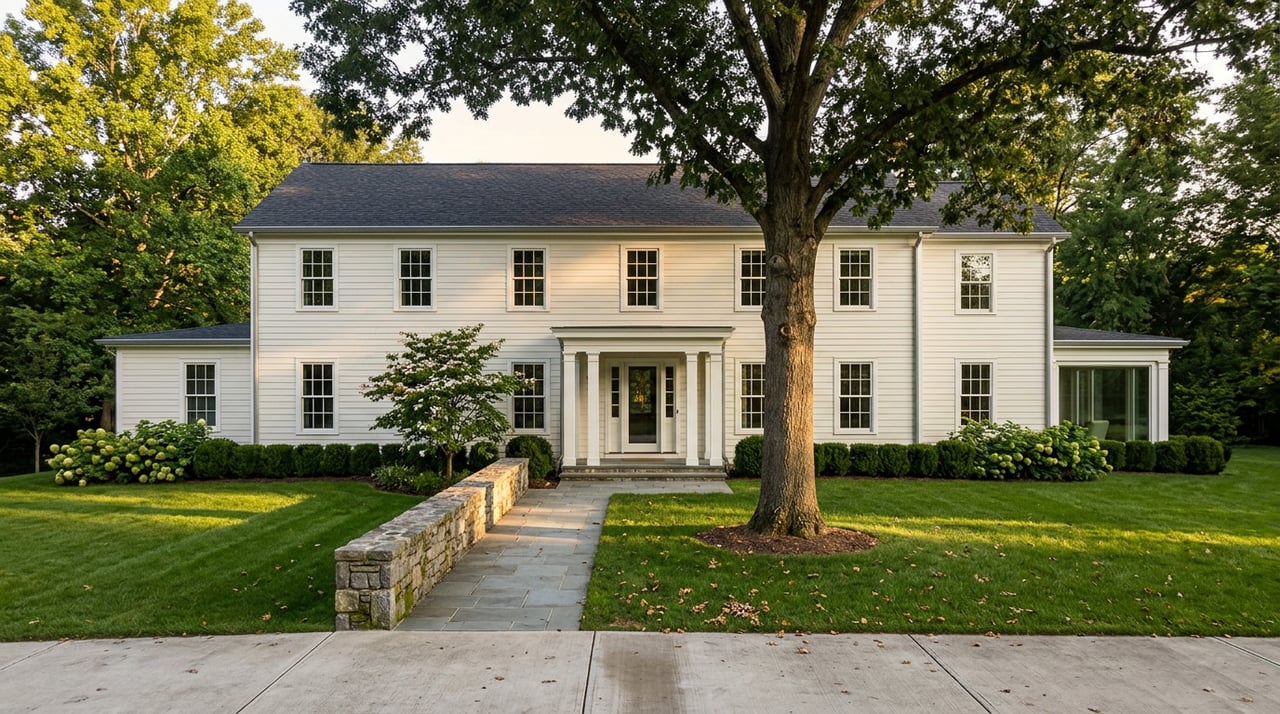
Oakton looks like one market from the street: mature oaks, half-acre lots, roughly sixteen miles from downtown Washington. What the curb doesn't tell you is which side of an invisible line the house sits on: connected to Fairfax Water's public sewer grid, or running on a private well and septic system tucked somewhere under the side yard.
That line matters more in 2026 than it did two years ago, because Virginia just changed what happens to septic properties at the closing table, and Fairfax County has quietly tightened what happens to them at the permit counter. If you're buying, selling, or planning an addition in Oakton, the answer to "sewer or septic" now changes your timeline before it changes your utility bill.
Why Oakton Still Has Septic Homes This Close to DC
Oakton has no town government. It's unincorporated Fairfax County, which means there was never a municipal push to extend sewer lines block by block the way an incorporated town might have done. Combine that with lot sizes that run half an acre to well over an acre, heavy oak and poplar canopy, and a build-out that happened in waves through the 1970s and 1980s, and you get a housing stock where public infrastructure didn't reach every parcel.
Fox Lake is a good example of what that looks like on the ground. The subdivision has its own homeowners association that maintains a private lake, trails, and a riding ring, and it expects a full submittal package before any exterior work starts. Oakton Terrace and Oakton Forest, some of the community's earliest residential development, carry similar large-lot DNA. None of this shows up as a filter on a listing site. It shows up when a soil scientist or a permit reviewer asks which system serves the house.
What Changed in July 2025
Virginia's HB 2671 took effect in the middle of last year and added a requirement that didn't exist before: a septic system inspection is now required as part of a property transfer. The inspection typically runs $300 to $500 and covers tank condition, the baffles, and the drain field.
That's a meaningful shift for a market where septic properties have historically closed on the same timeline as sewer-connected ones, with the buyer's home inspector giving the system a cursory look at best. Now there's a discrete line item, a discrete cost, and a discrete report that either clears the transaction or opens a negotiation.
A septic system that hasn't been inspected in years no longer stays invisible until move-in day. It surfaces during contract, with a dollar figure attached.
For sellers, that means the smart move is getting ahead of it. A pre-listing septic inspection costs the same $300 to $500 whether you order it in April or the buyer's lender requires it in July, but ordering it early means you control the narrative around any findings instead of reacting to them mid-negotiation. For buyers, it means budgeting time and money for this step even when everything else about the house looks move-in ready.
The Renovation Trap Nobody Mentions Until You're Mid-Project
Here's where the septic question gets expensive in a way most buyers don't anticipate. If a house on septic needs a bedroom added, whether that's a primary suite, an in-law addition, or converting a den into a fourth bedroom, the Fairfax County Health Department has to review and sign off on the septic system's capacity and the reserve drainfield area before the building permit can move forward. That review isn't a formality tacked onto the end. It's a gate at the front of the process.
The sequence generally looks like this:
- A contractor or soil scientist identifies the septic tank location and the reserve drainfield area on the lot.
- The proposed addition footprint is checked against that reserve area, along with root zones and existing grade.
- If the addition adds a bedroom, the Health Department reviews whether the existing system has capacity for the additional flow.
- Only after that sign-off can the building permit application move to the next stage with Fairfax County Land Development Services.
Skip step one and a contractor can spend weeks designing an addition that lands directly on the one patch of yard the county needs kept clear. There's a second trigger worth knowing about even for homes on public sewer: any land-disturbing activity on more than 2,500 square feet of a property requires a permit from Fairfax County before work begins. On Oakton's wooded, sloped lots, that threshold is easy to hit with a modest addition and a new patio.
The Sewer Side Has Its Own Blind Spot
None of this means a sewer-connected Oakton house is free of utility risk. Oakton fell into what plumbing contractors describe as the region's second wave of suburban development, with cast iron and early PVC piping that is now 45 to 60 years old. Oakton's particular mix of mid-1970s and early-1980s construction, set into some of the county's most heavily wooded terrain, creates conditions that actively favor root intrusion into the clay and cast iron laterals common to homes built in that window.
The private lateral, the pipe connecting your house to the public sewer main, is entirely the homeowner's responsibility under Fairfax County code. There's no county inspection program for laterals, no mandatory age-based replacement schedule, and no registry tracking which laterals in which neighborhoods are approaching failure. The county maintains the main under the street. Everything from your house to that main is yours to monitor.
So the honest framing isn't "septic bad, sewer good." It's that each system fails differently, and each failure is discovered on a different schedule. A septic system's failure now gets flagged at transfer thanks to HB 2671. A failing lateral under a sewer-connected home in Oakton Village or along one of the corridor's older streets can go unnoticed until a backup happens, because nothing in the transaction process currently requires anyone to check it.
What This Means Before You Write an Offer
If you're evaluating a house in Oakton, whether you're buying, selling, or planning to add square footage, a short list of questions changes what you're actually walking into:
- Ask directly whether the property is on public sewer/water or private well/septic. It won't be obvious from the outside.
- If it's septic, request the system's inspection and pump-out history. Septic system records are kept at the local health department and are available on request.
- If you're planning an addition that adds a bedroom, get the septic capacity question answered before you finalize a design, not after.
- If it's sewer-connected and built in the 1970s or 80s, ask about the lateral's age and any past root intrusion issues, since that responsibility sits with the homeowner regardless of what the county main looks like.
- If the property sits inside an association like Fox Lake, check the architectural review requirements separately from the county permitting process. HOA rules and county rules run in parallel, not in sequence.
None of these questions will appear in a listing description. They're the kind of thing that only comes up when someone who works this specific market walks you through it before the contract is signed rather than after.
Frequently Asked Questions
How do I find out if a specific Oakton house is on well and septic? Ask the listing agent directly, and confirm through the seller's disclosure. Septic system records, including permits and inspection history, are kept at the Fairfax County Health Department and are available upon request.
Does the new inspection requirement apply to homes on public sewer? No. HB 2671's transfer inspection requirement applies specifically to septic systems. Homes on public sewer aren't subject to it, though they carry their own lateral-maintenance responsibility as described above.
What if I want to add a primary suite and the house is on septic? Confirm the septic system's capacity and the location of the reserve drainfield before finalizing any design. If the addition includes a new bedroom, Fairfax County Health Department review of system capacity happens before the building permit can proceed, not alongside it.
Are HOA rules separate from Fairfax County's septic and permitting rules? Yes. An association like Fox Lake can require its own architectural review and submittal package for exterior work in addition to, not instead of, whatever Fairfax County requires for septic capacity or land disturbance.
If you're weighing an Oakton house that looks perfect on paper, the sewer-or-septic question is worth answering in week one, not during the inspection period. Leslie Hoban and the Hoban Real Estate Group walk buyers and sellers through exactly this kind of due diligence before it becomes a deadline. Book a white-glove consultation and we'll go through the specifics of the property you have in mind.