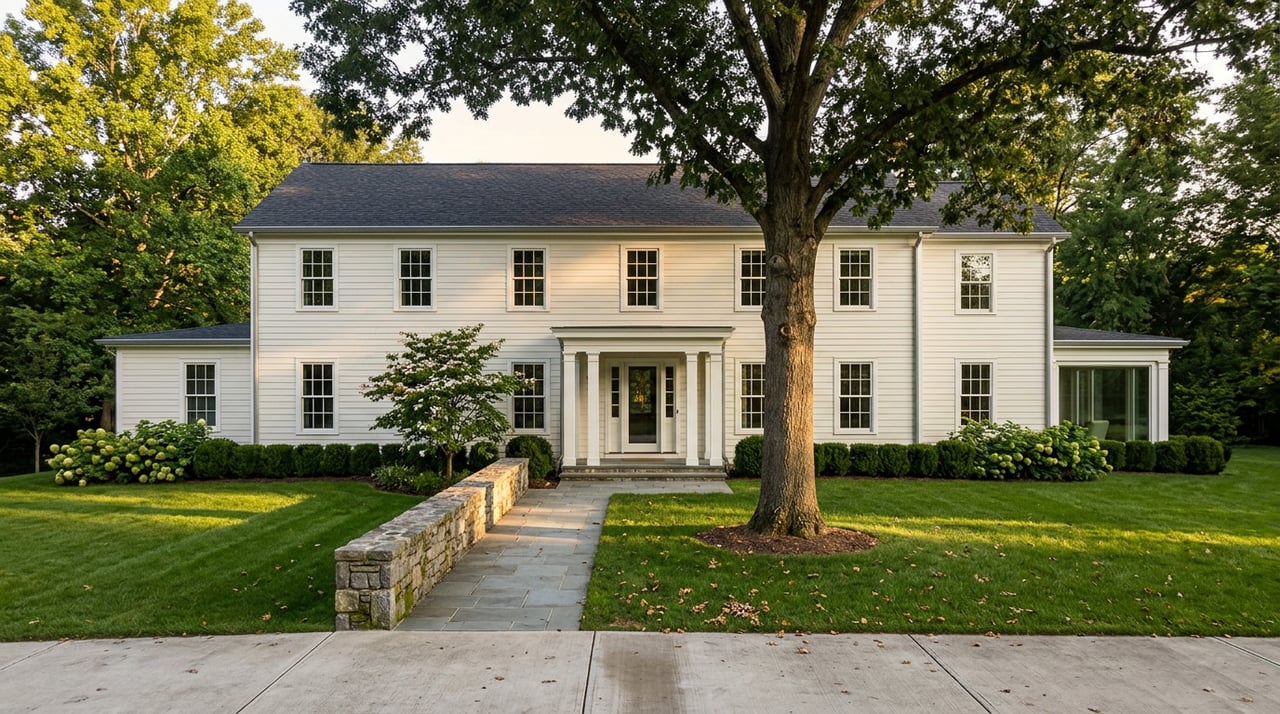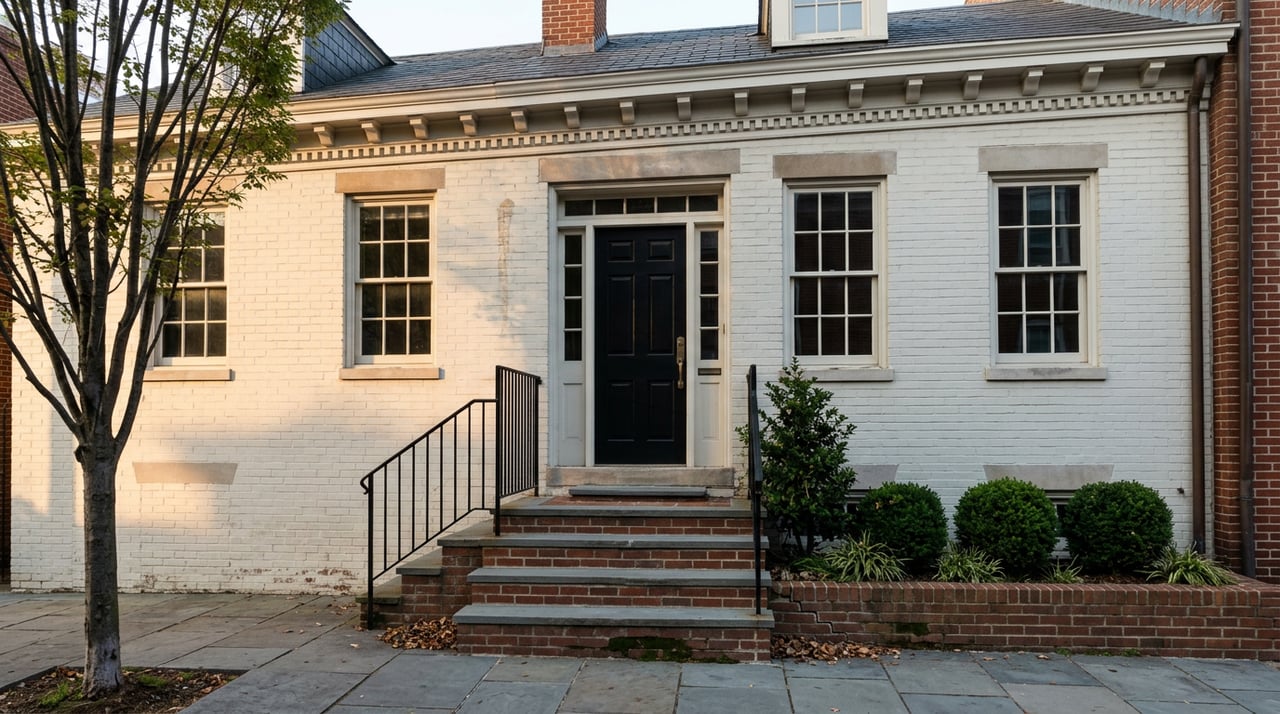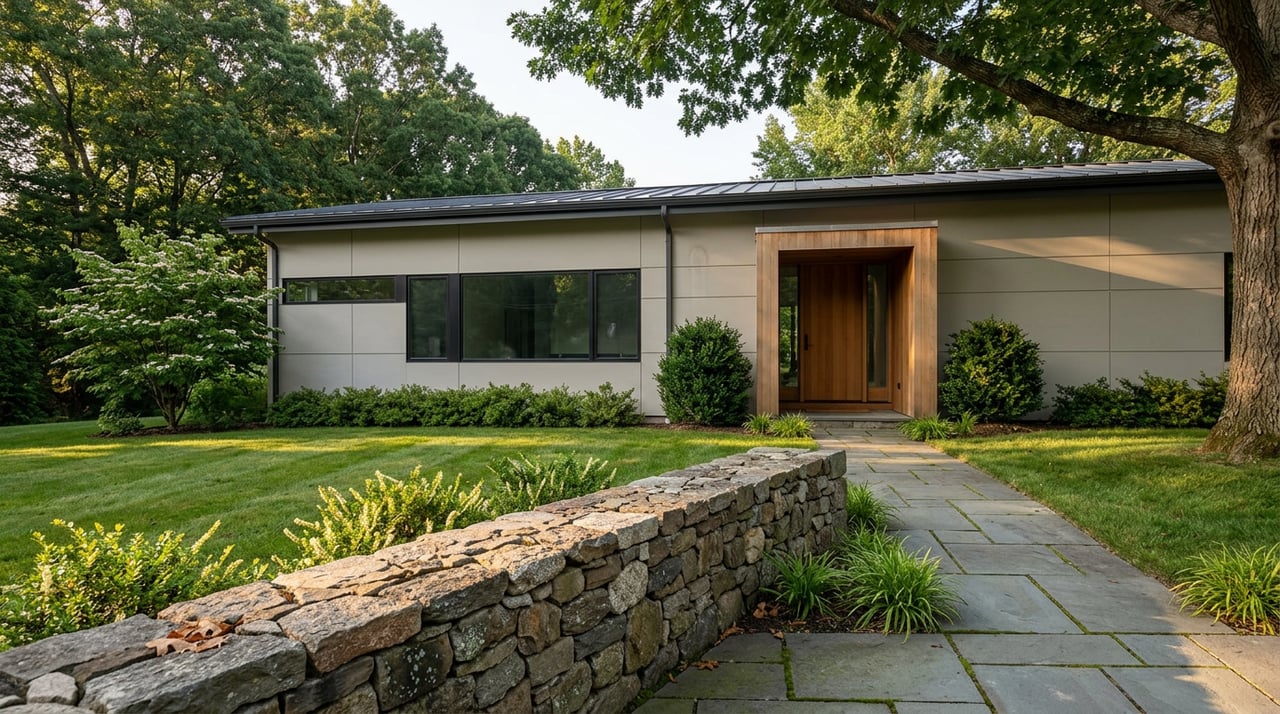
If you are comparing homes in Vienna against something a few blocks away in unincorporated Fairfax County, you have probably already looked at the county's real estate tax rate and assumed that number tells you what you will owe. It does not. Vienna is one of only three incorporated towns left inside Fairfax County, and that status means a home carrying a "Vienna, VA" address on the listing sheet might be paying a second layer of tax that a nearly identical home a few streets over never sees at all. The town's own budget season this year makes the point better than any explainer could, because the headline said one thing and the math said another.
The Half-Cent Cut That Didn't Feel Like One
On May 18, 2026, the Vienna Town Council voted 6-1 to lower the town's real estate tax rate from 19.5 cents to 19 cents per $100 of assessed value, effective with the fiscal year that began July 1. On paper that reads like relief. In practice, the average Vienna homeowner is still looking at a bill that goes up, because rising assessments outran the rate cut. Town staff had originally proposed holding the rate flat, which would have pushed the average bill up by roughly $121. The half-cent reduction that ultimately passed softened that to an estimated $80 increase instead of eliminating it.
Councilmember Jessica Ramakis led the push for the cut and was candid about what it actually accomplishes. She called it "a modest step" toward a lower rate she'd prefer, and was direct with residents about the limits of what the council had just done: "It is not a reduction in the tax bill for residents." Councilmember Chuck Anderson backed the cut but flagged the longer-term risk of leaning on it, warning against assuming the town could keep counting on "this built-in, automatic accelerant of property tax revenues" indefinitely.
That tension between the rate and the bill is worth sitting with if you're comparing Vienna to anywhere else, because it means the number you'll see quoted in a listing description or a market report is not the number that determines your carrying cost. The assessment does that, and the assessment moved more than the rate did.
Where the Extra Money Actually Comes From
The town's own budget documents explain why a rate cut and a bill increase can both be true at once. Real estate assessments across Vienna rose 6.2% this cycle, to roughly $7.9 billion town-wide, but that growth was not evenly split. Residential assessments climbed 6.8%, while non-residential (commercial) assessments rose only 2.2%. Since real estate taxes fund about 44% of the town's general fund, and each cent of the rate generates roughly $811,000 in revenue, homeowners are shouldering a growing share of a tax base that businesses are contributing less to, proportionally, than they used to.
That shift matters for anyone weighing whether Vienna's rate trajectory is likely to keep helping buyers. A half-cent cut sounds like momentum toward Ramakis's stated target of 18.6 cents, the level she said would actually stop residents from seeing increases. But if commercial growth keeps lagging residential growth, the town has fewer places to find that relief besides continuing to lean on homeowners, which argues for treating any future rate cut with the same caution Anderson raised rather than assuming it compounds.
The Line Nobody Puts on the Listing Sheet
Here's the part that changes how you should actually shop. Vienna's real estate tax is a town tax layered on top of Fairfax County's rate, which sat at $1.1225 per $100 of assessed value for the county's current fiscal year, plus a stormwater fee of 0.0325 per $100 that applies broadly across the county. A home standing inside the actual Town of Vienna boundary pays all three: the county rate, the stormwater fee, and the town's 19 cents. A home carrying a Vienna mailing address that sits just outside the town's boundary, in unincorporated Fairfax County, pays only the first two. Same ZIP code area, same school pyramid in many cases, different tax exposure entirely.
This isn't a quirk unique to Vienna. Fairfax County has only three incorporated towns, Vienna, Herndon, and Clifton, and everywhere else that carries a place name like Oakton, McLean, Great Falls, or Reston is an unincorporated community with no separate municipal tax layer at all. Vienna's postal and school-boundary footprint stretches well beyond the town's actual incorporated boundary, which means plenty of homes marketed as "Vienna" never touch the town's tax rolls, its independent police department, or its town council votes.
To see what that boundary is worth in dollars, take a home near Vienna's recent median sale price, which Redfin put at roughly $1.6 million for the three months ending May 2026. Here's how the same assessed value plays out depending on which side of the line it sits on:
Where the home sits | County tax | Stormwater fee | Town tax | Total annual tax |
|---|---|---|---|---|
Inside Town of Vienna limits | $17,960 | $520 | $3,040 | $21,520 |
Same value, unincorporated Fairfax ("Vienna" address) | $17,960 | $520 | $0 | $18,480 |
The gap is exactly the town's rate, nothing more and nothing hidden, but $3,040 a year is not a rounding error, and it is invisible on a listing sheet unless someone checks the parcel against the town boundary.
What the Extra Line Item Buys You
None of this means the town layer is a bad deal, only that it's a deal you should be able to name. Vienna maintains its own police department, separate from the Fairfax County Police Department that covers the rest of the county. The town also runs its own trash pickup, recycling collection, leaf collection, street cleaning, and snow removal, plus a dedicated Parks and Recreation department, rather than folding residents into county-wide versions of those services. For some buyers, an independent police force and town-run snowplowing during a bad winter are worth the extra line on the bill. For others, especially investors or buyers stretching for a specific price point, the same services delivered at the county level are good enough, and the boundary line is where real savings live.
Before You Write the Offer
If you're comparing homes across this line, a few checks take less time than a home inspection and matter just as much to your monthly budget:
- Confirm whether the specific parcel sits inside the Town of Vienna boundary, not just whether the mailing address says Vienna. The town's own real estate tax lookup will show you a property's tax history by address or parcel ID.
- Ask your agent to pull both the county and town assessment records if the property could be near the boundary, rather than relying on the county's estimate alone.
- Run the math on both layers before comparing two properties by list price. A home $50,000 cheaper outside the town line might still cost more per year once you account for a lower purchase price against a higher effective rate elsewhere, or vice versa.
- Watch what happens at the next town budget cycle. Vienna's council has cut the rate twice since 2023 while assessments kept climbing, which is a pattern worth tracking rather than assuming it repeats automatically.
Frequently Asked Questions
Does every home with a Vienna mailing address pay the town's real estate tax? No. Only parcels inside the actual Town of Vienna boundary pay the town rate. A large share of homes with a Vienna address sit in unincorporated Fairfax County and pay the county rate only.
Is Vienna's tax rate likely to keep dropping? Uncertain. The council's own members were split on how far to cut this year, and the town's revenue growth increasingly depends on residential assessments rising faster than commercial ones, which limits how much room future councils have to cut further without cutting services.
How do I find out if a specific address is inside the town limits? The most reliable way is to look up the parcel directly through the Town of Vienna's finance department or ask your agent to confirm jurisdiction before you write an offer, since boundary lines can run down the middle of a neighborhood without any visible marker.
Tax lines like this one are exactly the kind of detail that separates a comfortable closing from a surprised one. If you're weighing a home inside Vienna against something just outside it, Leslie Hoban and the Hoban Real Estate Group can pull the actual parcel-level numbers before you write an offer, not after you get the bill. Book a white-glove consultation and let's run the math on your specific short list together.